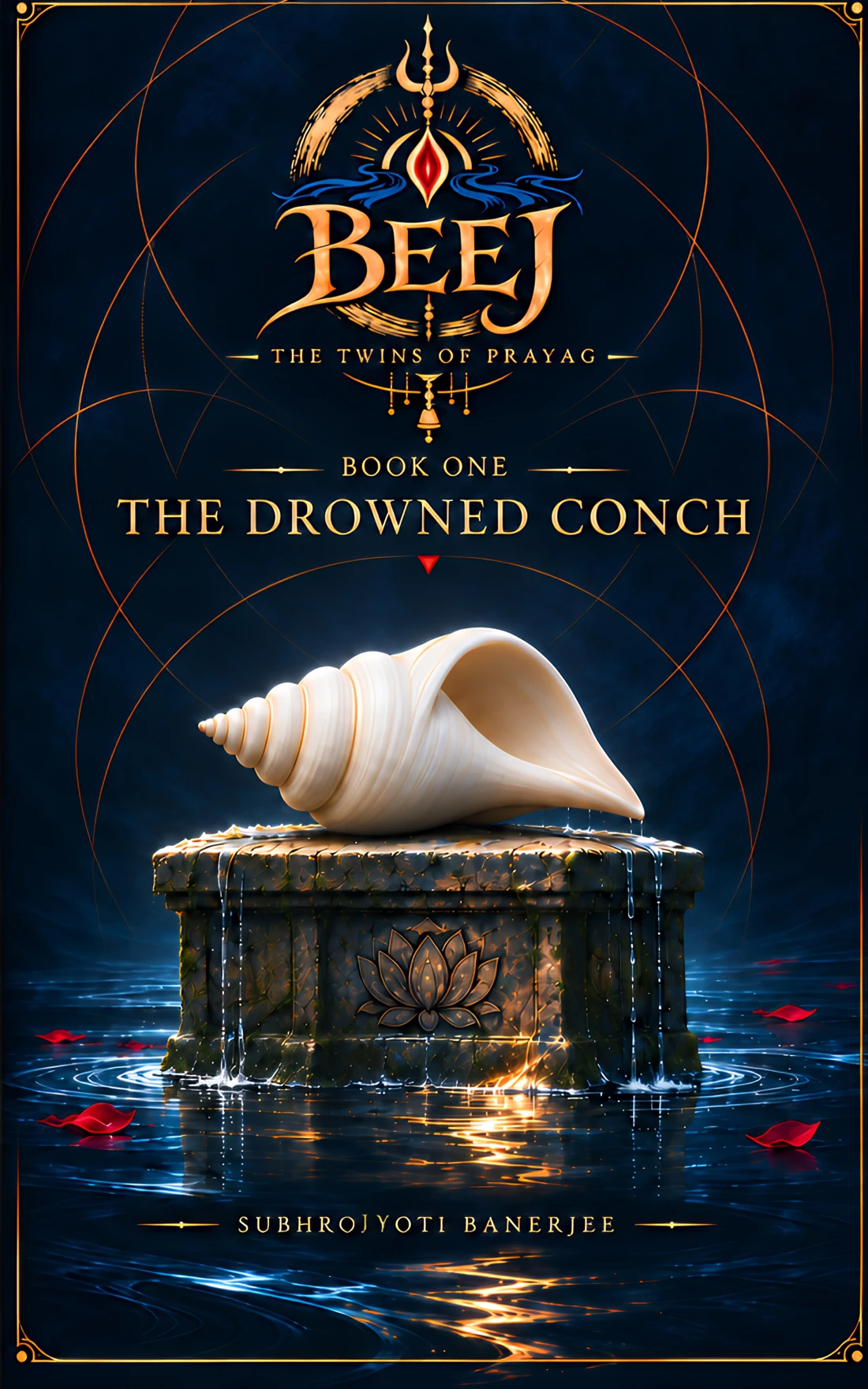
Une même perte. Deux vies. Deux sankalpas.
L’histoire
Au confluent sacré de Prayag, un mouvement de foule arrache les jumeaux Anya et Arya, âgés de cinq ans, à leur famille — et l’un à l’autre.
Ils subissent la même perte. Pourtant, les sankalpas qui en naissent — ces intentions profondes qui orientent leur vie — les entraînent sur des chemins radicalement différents.
Bien avant leur naissance, la Mère divine Kali vainquit Raktabeej, le redoutable asura dont chaque goutte de sang versée pouvait donner naissance à un autre lui-même.
Mais si sa destruction n’avait pas réellement marqué la fin de son histoire ?
Dans l’univers de BEEJ, six anciens Principes primordiaux demeurent séparés, leur terrible potentiel tenu à l’écart d’un retour qui ne devrait jamais se produire.
À mesure que les savoirs oubliés et les ambitions humaines se rapprochent, certaines questions deviennent impossibles à éluder.
La compassion et le désir de tout maîtriser peuvent-ils naître d’un même chagrin ? À quel moment un vœu de protéger devient-il un refus d’accepter la perte ? Et si la puissance répond à l’intention de celui qui la recherche, qu’est-ce qui détermine si elle préservera ou détruira ?
Certaines choses ont été séparées pour une raison.
Un mot de l’auteur
Le récit de Maha Kali et de Raktabeej m’accompagne depuis l’enfance. Mais ce qui me fascinait le plus n’était pas seulement ce démon dont le sang pouvait le multiplier. C’était l’idée que détruire un être ne signifie pas nécessairement mettre fin à ce qui faisait de lui ce qu’il était.
De là est née une autre question.
Que se passe-t-il lorsque deux personnes subissent exactement la même perte, mais se font des promesses entièrement différentes sur ce qui doit venir ensuite ?
Cette question est devenue le cœur de BEEJ.
Le sankalpa est bien plus que de la détermination. C’est l’intention qui donne une direction à nos choix. Une promesse née de l’amour peut mener à la compassion. Ce même amour, lorsqu’il est façonné par la peur, peut devenir un besoin désespéré de tout contrôler. Au départ, la différence n’est pas toujours visible.
J’ai voulu explorer ces zones d’incertitude dans un monde de mythologie ancienne, de savoirs oubliés et de personnages dont les choix entraînent des conséquences qui les dépassent.
Je ne veux pas dicter aux lecteurs les réponses qu’ils devraient trouver.
Je préfère leur laisser des questions qu’ils ne s’attendaient peut-être pas à se poser.